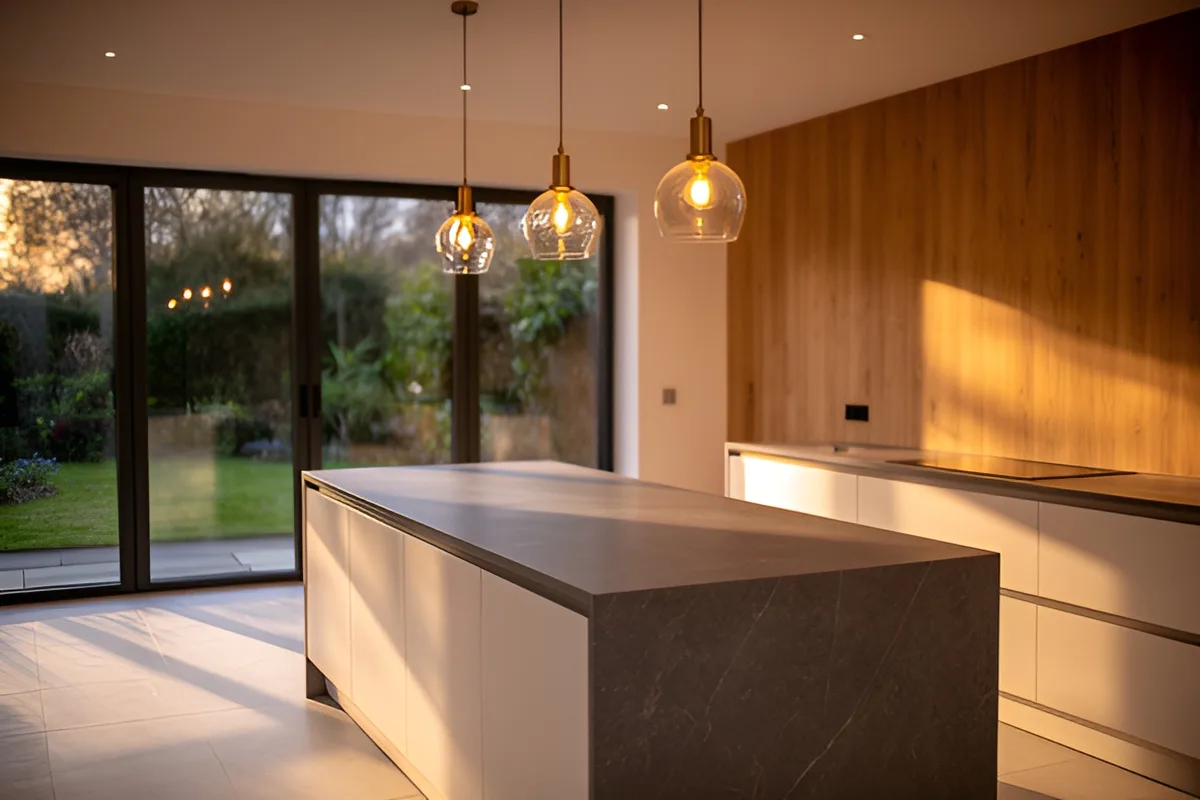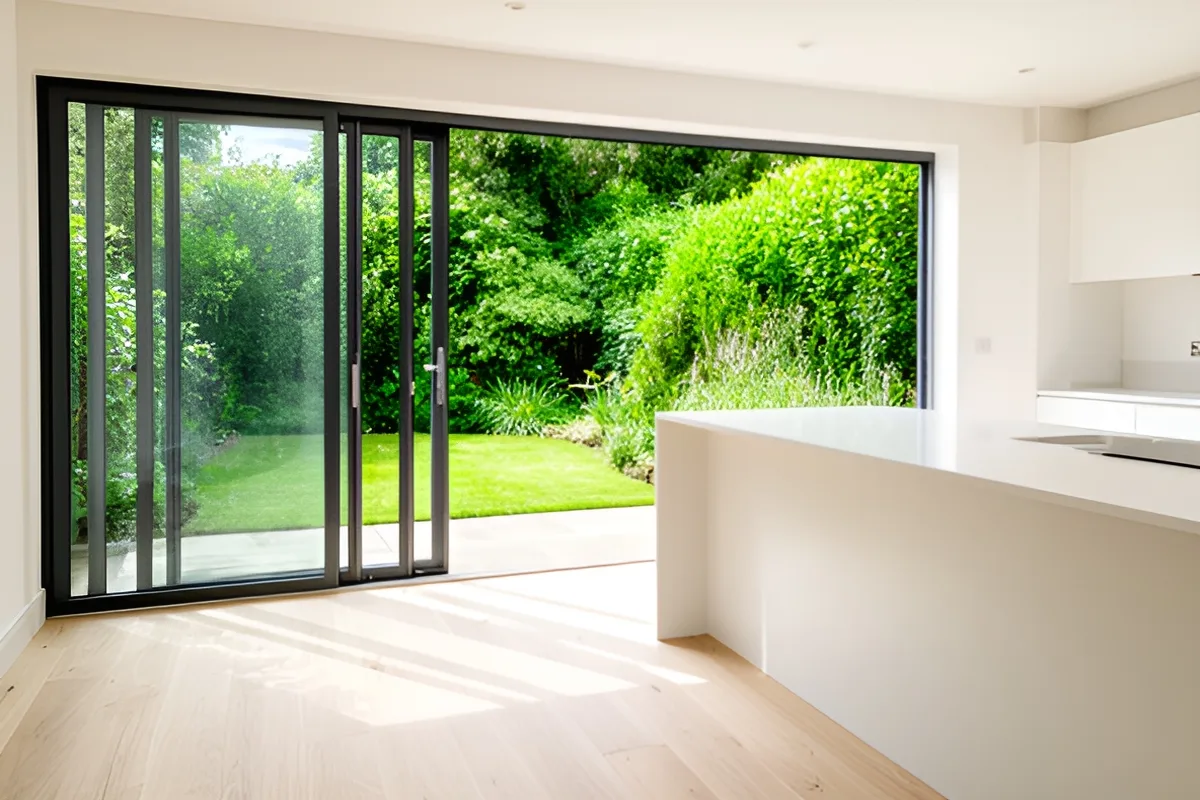
The number on a kitchen quote is not the cost of a kitchen. It is the cost of a small building that happens to contain one. Once you add foundations, a roof, structural openings, drainage, electrics and the temporary kitchen you will use for four months, the budget looks very different from the showroom price for cabinets.
Key facts at a glance
- A small bump-out of 15 m² typically costs $45,000 to $70,000.
- A full rear extension of 30 m² runs $85,000 to $140,000.
- Structure and services consume 45% to 60% of the budget.
- Kitchen cabinetry and appliances are 20% to 30% of the total.
- A 15% contingency is standard, 20% for older houses.
The figures below are 2026 installed costs for a mid-range specification, collected from contractor quotes and published cost guides. They assume a straightforward site with reasonable access. Anything unusual, from a sloping plot to a shared sewer, moves the number quickly.
What the three project types actually mean
A bump-out adds two to three metres to an existing wall, usually less than 15 m². It is the cheapest way to gain space because the existing roof and services can often be extended. Budget $45,000 to $70,000.
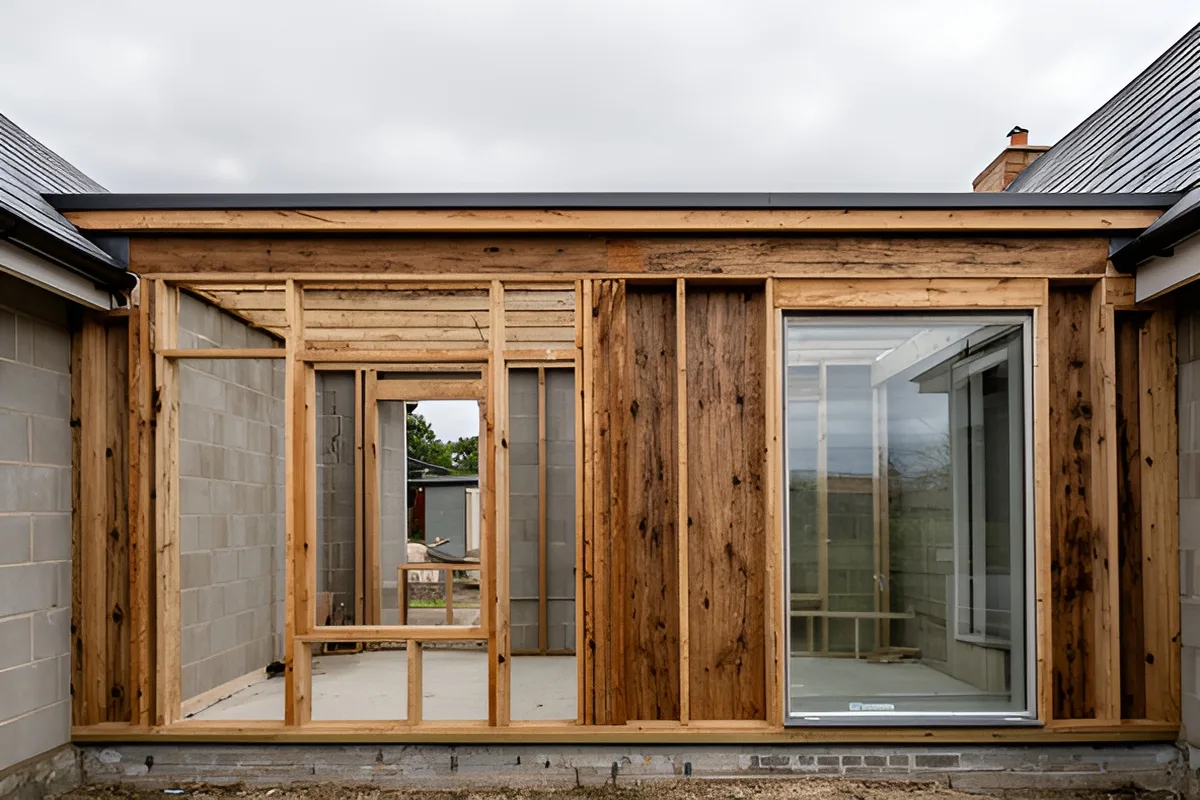
A rear extension of 25 to 35 m² replaces the back wall with steel and glass. It needs new foundations, a new roof structure and usually a new drainage run. Budget $85,000 to $140,000.
A full kitchen rebuild inside the existing footprint is a different job. It costs $35,000 to $90,000 depending on whether walls move and services are relocated. It will not add floor area, but it is often the better return if the room is already large enough.
Where the money goes, line by line
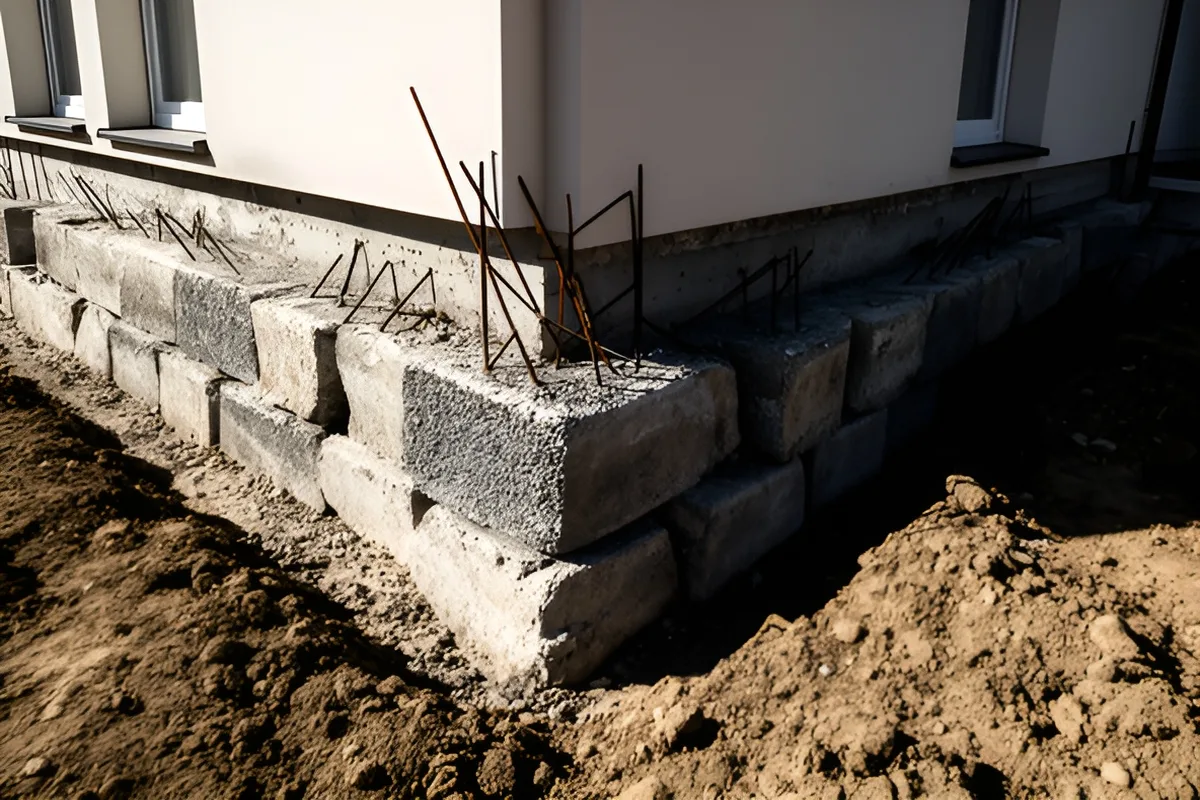
Foundations and groundworks: $8,000 to $22,000. This includes excavation, footings, blockwork, drainage and making good. A high water table, rock or an old soakaway can double it. Get a ground investigation before you sign a fixed-price contract; the cost is small against the risk.
Structure: $12,000 to $30,000. Steel beams, lintels, floor structure and roof framing. Steel prices moved sharply in recent years, so ask for the beam schedule and confirm the quote includes crane hire and installation.
Envelope: $10,000 to $28,000. Insulated walls, roof covering, windows and doors. This is where cheap decisions cost the most later. A poorly insulated flat roof will make the room uncomfortable and the energy rating worse for the life of the building.
Services: $8,000 to $18,000. Electrics, plumbing, heating, ventilation and drainage connections. Moving a soil stack is far more expensive than moving a socket, and the difference should be settled at design stage.
Finishes and kitchen: $15,000 to $40,000. Plaster, flooring, decoration, cabinetry, worktops and appliances. This is the visible part and the easiest to overspend on when the structure has already gone over budget.
What $50,000 buys in practice
At the lower end, $50,000 buys a 12 to 15 m² bump-out with standard glazing, a modest kitchen run and mid-range appliances. It does not buy a large island, a roof lantern or a full wall of sliding doors. Those three items alone can add $20,000 to $35,000.
If your budget is fixed at $50,000, decide early whether you are buying space or finishes. The answer should be space, because finishes can be upgraded later and square metres cannot. Choose a simple rectangular footprint, keep the kitchen on the existing wall, and spend the money on insulation and glazing quality rather than a statement worktop.
Every extension has two budgets: the one for the building and the one for the kitchen inside it. Contractors quote the first and homeowners remember the second.
The costs nobody puts in the quote
Planning and building permit fees, structural engineer drawings and party wall agreements add $2,000 to $6,000. A temporary kitchen setup, storage for furniture and increased utility bills during the build add another $1,500 to $4,000. If you move out, add rent.
Then there is the rest of the house. Dust travels, and a new extension often makes the adjacent room look tired. Homeowners frequently spend a further 10% to 15% on connected work they did not plan. Set that expectation before the first wall comes down.
Timeline, realistically
Design and permits take eight to sixteen weeks. Structural work and weatherproofing take six to ten weeks. First fix, plaster and second fix take another eight to twelve weeks, and the kitchen install adds two to four. A four-month build is optimistic for a full extension; five to seven months is normal.
Weather, inspection schedules and material lead times cause most delays. Order the kitchen early, but do not have it delivered before the room is plastered and dry. Storing cabinets in a damp garage for six weeks is how a good kitchen gets ruined before installation.

How to compare three quotes
- Insist on a line-item scope, not a lump sum.
- Confirm who pulls permits and pays fees.
- Check what is excluded: landscaping, making good, skips, scaffolding.
- Ask for the payment schedule tied to milestones, with a 5% retention.
- Verify insurance and licence before work starts.
Compare the allowances for tiles, worktops and appliances. One quote may look cheaper because it assumes $40 per square metre of tile while another assumes $120. Normalise the specification, then compare.
Is it worth it?
An extension rarely pays back fully on resale, but a well-designed kitchen that connects to the garden usually returns 60% to 80% of its cost in added value, and much more in daily use if you cook at home. The calculation changes if the house already has enough space. In that case, a $40,000 internal remodel will often outperform a $100,000 extension on both cost and enjoyment.
Get a valuer's opinion before you commit. A local agent can tell you what the finished house would sell for and whether the extra bedroom or kitchen would be the better investment. That hour of advice is cheaper than discovering the answer two years later.
For the official reference behind this guide, see nahb.org. If you are planning the next step, read our guides to Renovation Permits: The Timeline Nobody Budgets For and Warm Minimalism: Materials That Still Age Well in 2026, or browse every Construction & Renovation guide.